
RECOMMENDED |
|---|
Q3 2025 |
LOCATION |
Lexington, KY |
RESIDENTIAL UNITS |
32 |
AFFORDABLE UNITS |
12 |
CDFI LENDER |
Fahe |
DEVELOPER |
Will Hanrahan, 1000 Delaware LLC |
DEVELOPER PARTNER |
Metzler Creative (Kevin Metzler & Paul Metzler) |
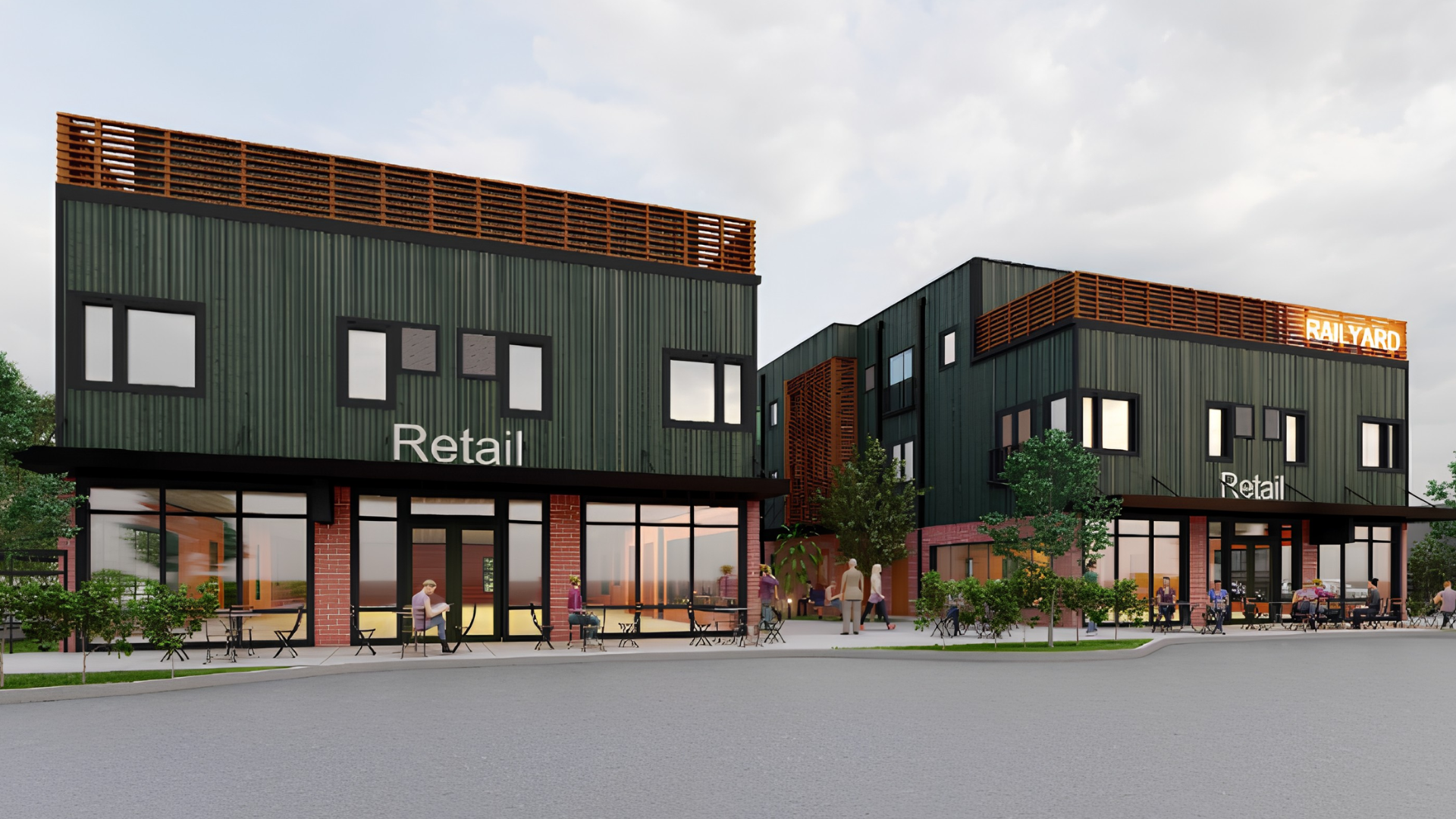
Photo rendering credit: Studio A Architecture
PROJECT SNAPSHOT
- Project Type: Mixed-use infill development
- Residential Units: 32
- Affordable Units: 12 units at or below 80% AMI
- Commercial Space: Two ground-floor retail spaces
- Community Impact: Housing creation, neighborhood revitalization, small business opportunity, and walkable urban development.
- Strong local, state, federal, and community support
Hope Community Capital completed underwriting in support of loan approval for a nonrevolving construction loan with conversion to permanent loan through the Bond Guarantee Program from Community Development Financial Institution (CDFI) lender Fahe to support The Railyard, a mixed-use development located at 1000 Delaware Avenue in Lexington, Kentucky. At the time of underwriting, the project presented a unique opportunity to address the region’s growing need for housing while revitalizing an underutilized urban site through a thoughtful combination of residential and commercial development. Since underwriting was completed and financing approved, the project has progressed to construction, demonstrating the strength of the development concept and the value of strategic investment in established neighborhoods.
When complete, The Railyard will feature 32 residential units across three newly constructed buildings, including studio, one-bedroom, and two-bedroom apartments, along with two ground-floor commercial spaces. Twelve of the one-bedroom apartments will be reserved for households earning at or below 80% of the Area Median Income (AMI), supporting Lexington’s workforce housing needs while maintaining a sustainable mixed-income operating model.
Financing a project like The Railyard is complex. The development involved redeveloping a former industrial site, constructing a mixed-use property, creating income-restricted apartments, and supporting a developer undertaking a project of this scale for the first time—all factors that made conventional lenders reluctant to commit.
Fahe recognized an opportunity to make a meaningful neighborhood investment by supporting workforce housing with enforceable affordability commitments in an underinvested area. The project closely aligned with Fahe’s community-lending mission of providing flexible, mission-driven capital to projects that may not fit conventional lending models.
Dwain Neely
Senior Vice President of Community Lending, Fahe
The Railyard exemplifies the power of infill development, transforming a vacant and underutilized one-acre parcel within Lexington’s urban core into new housing, commercial space, and economic activity. The project leverages existing infrastructure and is intentionally designed around walkability and alternative transportation. Nearby Lextran bus routes serve the site, and it sits near the proposed East Lexington Bike Trail; the development will also provide bicycle parking for residents. Access to existing infrastructure was crucial because of limited parking at the Railyard.
The site’s location was a key strength identified during underwriting. Situated within a revitalizing corridor surrounded by local businesses, churches, employment centers, and established residential neighborhoods, The Railyard builds on existing community assets rather than requiring costly new infrastructure. The project includes 29 on-site parking spaces for its 32 residential units and commercial uses, with additional free on-street parking available in the surrounding neighborhood. While the limited on-site parking was identified as an underwriting consideration, the development was intentionally designed to appeal to residents who can take advantage of walking, bicycling, and public transit. This combination of infill development, transit access, and alternative transportation options supports Lexington’s broader goals for connected, sustainable neighborhood growth.
Further, the analysis recognized both the opportunities and risks associated with a first-time lead developer while also identifying significant strengths, including strong guarantor support, an experienced development team, broad community backing, and a project concept aligned with local housing priorities.
The project received endorsements from local elected officials, community organizations, and federal leadership who cited its contribution to affordable housing, small business development, adaptive reuse, and neighborhood revitalization. These factors reinforced the project’s ability to generate meaningful community impact while supporting long-term financial sustainability.
For HCC, The Railyard showcases our ability to underwrite complex real estate projects that balance financial feasibility with community impact. Our analysis considered market conditions, sponsor capacity, affordability commitments, development team qualifications, and long-term project sustainability. The successful progression from underwriting to groundbreaking reflects a project that was carefully structured to meet both lending standards and community development objectives.