
By Peter Beeson
Across the United States, the affordable housing crisis continues to deepen. Seniors and families in every community – urban, suburban, and rural – are struggling to keep up with rising housing costs. Even as new apartments enter the market, high rents have pushed more Americans than ever into cost‑burdened living situations, fueling a sharp rise in homelessness.¹
At the same time, faith communities across the country find themselves at a crossroads. With shifting demographics and declining religious affiliation, many churches have underutilized buildings and land, and a historic focus on missional alignment and community flourishing. This intersection between a growing housing need and a changing religious landscape has created one of the most promising, yet underexplored, opportunities in modern community development.
The Evolving Landscape of Affordable Housing
Housing experts have warned for years that the U.S. is in an escalating affordability crisis, and the data reinforces this reality. Despite the potential Low‑Income Housing Tax Credit (LIHTC) program improvements, the need continues to outpace supply. Households across the country face mounting pressures:
- Rents remain at historically unaffordable levels, even with new multifamily construction, causing more households to spend 30–50% or more of their income on housing.¹
- Homelessness has sharply increased as cost burdens spread beyond high‑priced metro areas into small cities, suburbs, and rural communities.¹
- Federal rental assistance reaches households across every geography: 50% urban, 31% suburban, and 19% rural, showing that housing stress is not isolated to major cities.²
This widespread demand for affordable housing requires new thinking, especially when it comes to land.
The Potential of Church‑Owned Property
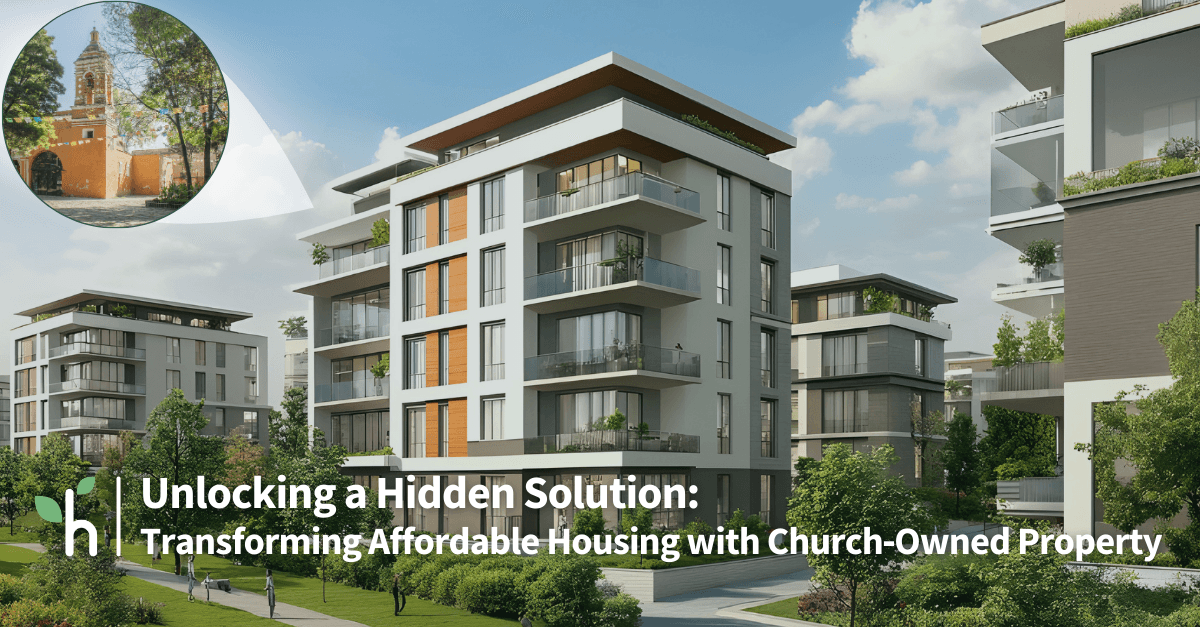
This is where churches come in. Congregations and regional bodies collectively own more than 2.6 million acres of land and hundreds of thousands of buildings nationwide. From large campuses to small parcels, these properties are often centrally located within neighborhoods, near transit and services, and deeply connected to local residents as the anchors of the communities.
As congregations discern ways of meeting the needs of their neighbors while stewarding their resources wisely, many are rediscovering a renewed mission: to use one of the largest assets they own, their land and buildings, to serve the needs of their community and enhance their long-term sustainability. Redeveloping their property to include affordable housing, or community service facilities – like a local grocery store, health clinic, or gym or mentorship program, or elder care drop-in center – open to the community, aligns powerfully with this call.
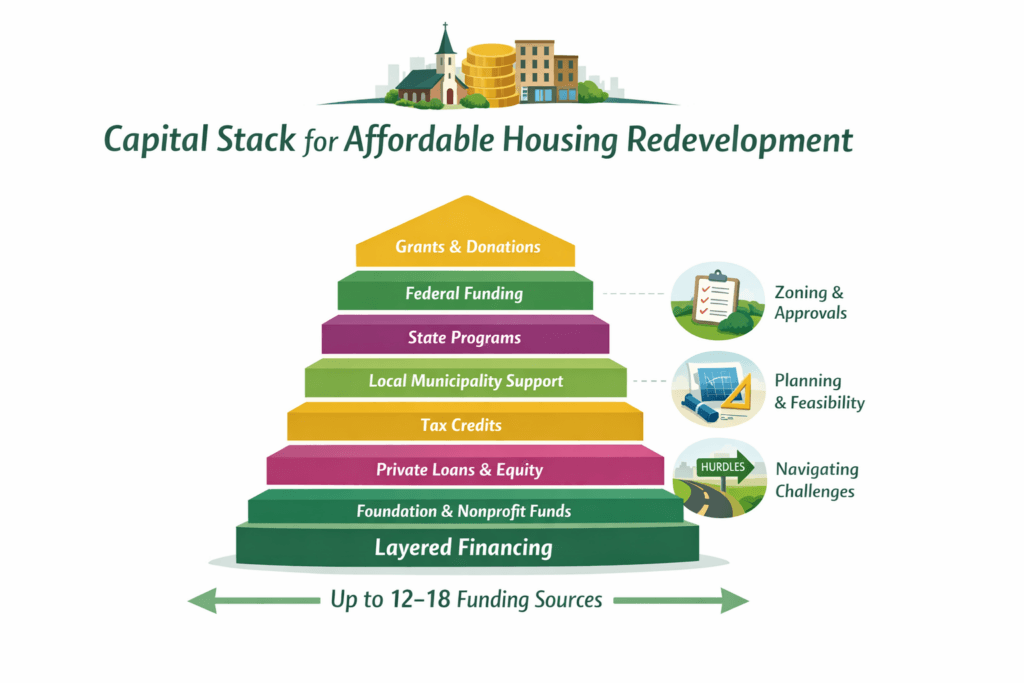
Successfully navigating a large redevelopment project, involves creating a capital stack with up to 12 to 18 different funding sources, including federal, state, and local municipality funding – not to mention navigating zoning, planning, and other hurdles. While congregations have the underlying land and missional willingness, they need specialized support and leadership to develop a project.
Why HCC Is Launching a New Church Property Redevelopment Service
Recognizing both the immense community need and the untapped potential within faith‑owned properties, Hope Community Capital is expanding its community development advisory consulting to include a new line of service dedicated to church‑owned property redevelopment. This initiative expands upon our long‑established development advisory expertise in affordable housing and community facilities while honoring the unique needs, values, and missions of faith communities.
Our new service is designed to:
- Guide congregations through the appraisal of their land and buildings
- Steer community‑rooted visions for underused property from a missional perspective
- Shepard churches through zoning, feasibility studies, and financing
- Develop properties to ensure alignment with financial sustainability, mission consistency, and for flourishing their communities
This work is not just about buildings – it’s about leveraging assets for long‑term community impact.
A Path Toward Equity, Inclusion, and Community Renewal
At its core, church‑property redevelopment is a story about equity, ensuring that everyone, regardless of income or background, has a place to call home. It’s also a story about inclusion, as congregations explore new ways to serve their neighborhoods, beyond Sunday morning audiences.
By reimagining faith‑owned land as a catalyst for affordable housing, we can:
- Expand housing choice and stabilize neighborhoods
- Support families at risk of displacement
- Honor the social mission of faith institutions and leverage their assets for the flourishing of the community
As the nation continues to face unprecedented housing challenges, the role of faith communities is pivotal. With the right tools, partners, and vision, underutilized properties can become the foundation for stronger, more equitable communities.