
By Peter Beeson
HCC team members Dave Porterfield, Emily Francis, and Peter Beeson joined housing professionals from across Wisconsin at the A Home for Everyone Conference on July 29 and 30. The statewide conference brought together housing leaders, policymakers, advocates, developers, and practitioners to discuss one of Wisconsin’s most urgent challenges: how to expand and preserve safe, affordable homes for people and communities that need them most. Brian Goldstone’s keynote left a lasting impression. Drawing from his Pulitzer-prize winning book There Is No Place for Us: Working and Homeless in America, he shared real-world stories of working families forced into homelessness due to failures in state and local policies and the erasure of the social safety net.
While the conference focused on affordable housing, a broader theme emerged across sessions and conversations: successful community development is about more than financing. The strongest projects bring together leadership, partnerships, technical expertise, community support, and thoughtful investment to create lasting impact. Throughout the
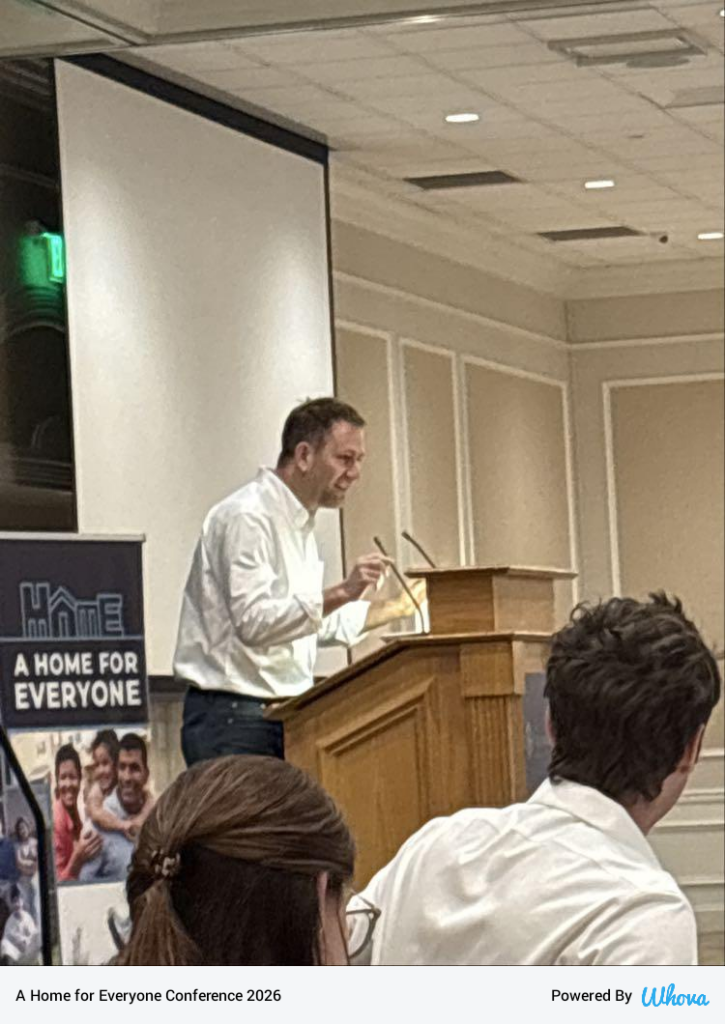
Photo Credit: Conference attendee, shared via Whova, the A Home for Everyone Conference app.
conference, examples of these interconnected forms of “capital” were on full display.
For HCC, the conference was both a learning opportunity and a chance to be part of the broader ecosystem of creating homes for everyone throughout Wisconsin. Emily Francis co-presented on Case Studies in Permanent Supportive Housing with Brad Hinkfuss and Sara Allee-Jatta of Housing Initiatives, sharing successful examples of how permanent supportive housing projects can move from concept to completion. The presentation highlighted that permanent supportive housing requires much more than a successful development plan. Projects succeed when financing, service providers, developers, local leadership, and community partners work together to support long-term housing stability. These collaborative efforts demonstrate how multiple forms of community capital must align to create lasting outcomes.
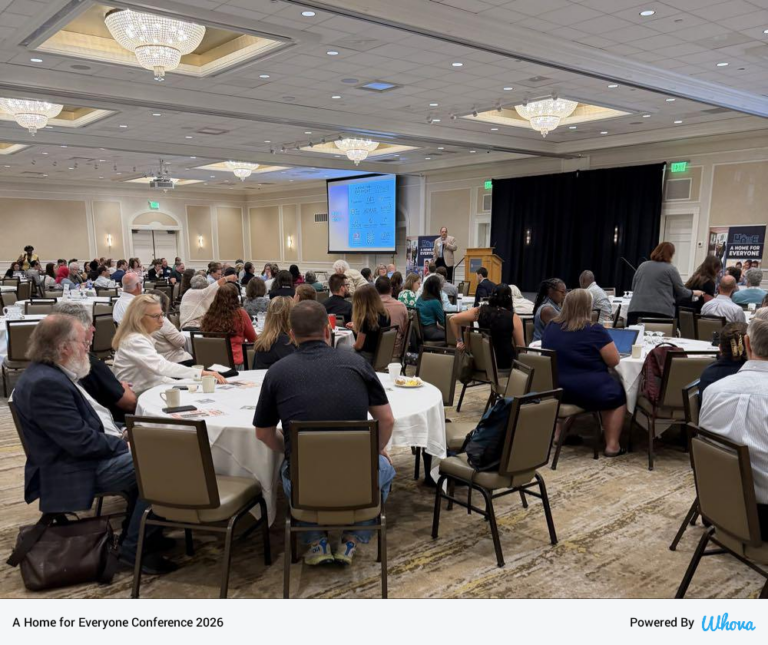
Photo Credit: Conference attendee, shared via Whova, the A Home for Everyone Conference app.
Seeing Solutions Up Close
Beyond the conference sessions, site visits offered a firsthand look at how affordable housing strategies take shape in the built environment. One stop was the Milwaukee Soldiers Home, a historic adaptive reuse project on the Clement J. Zablocki VA Medical Center campus in the heart of urban Milwaukee. Developed by The Alexander Company and a broad team of public, private, and nonprofit partners, the project restored six historic buildings and created 101 supportive housing units for veterans and their families who are homeless or at risk of homelessness. The project preserved an important community asset while creating housing opportunities for veterans, showing how thoughtful investment can honor the past while addressing present-day housing needs.
The Soldiers Home illustrates the power of combining historic preservation, creative financing, and supportive services. Using tools such as Low-Income Housing Tax Credits, federal and state historic tax credits, and other funding sources, the project transformed long-vacant historic buildings into homes and services that continue the campus’s original purpose: serving veterans.
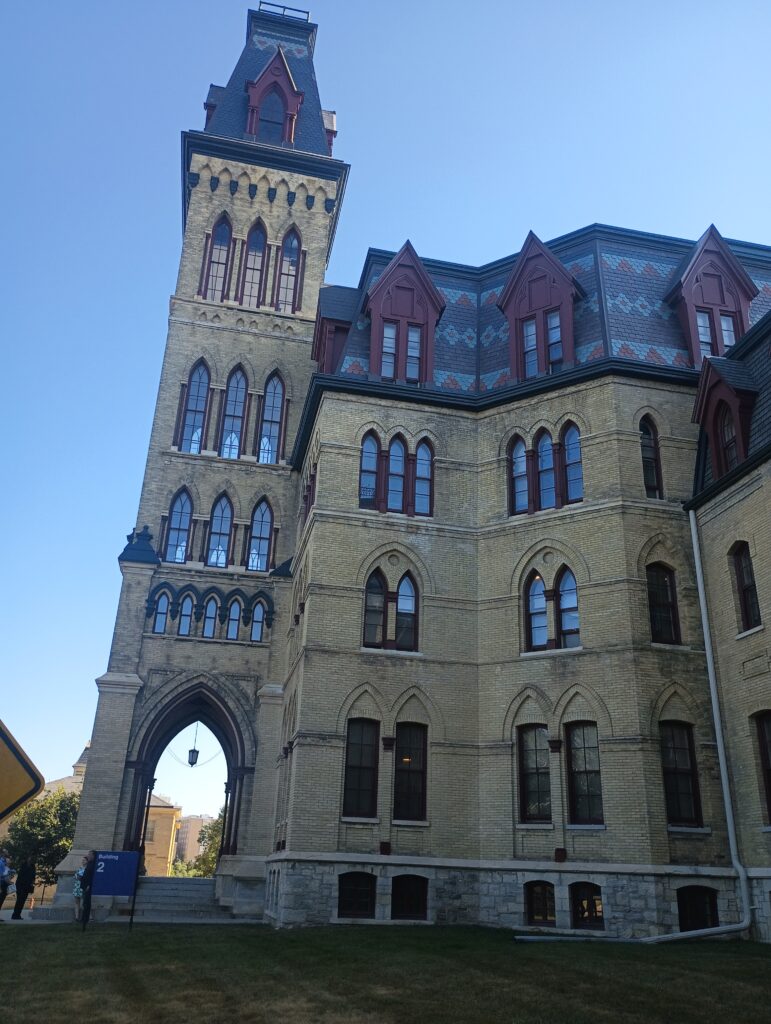
Photo Credit: Peter Beeson | Exterior view of one of the buildings in the Milwaukee Soldiers Home campus
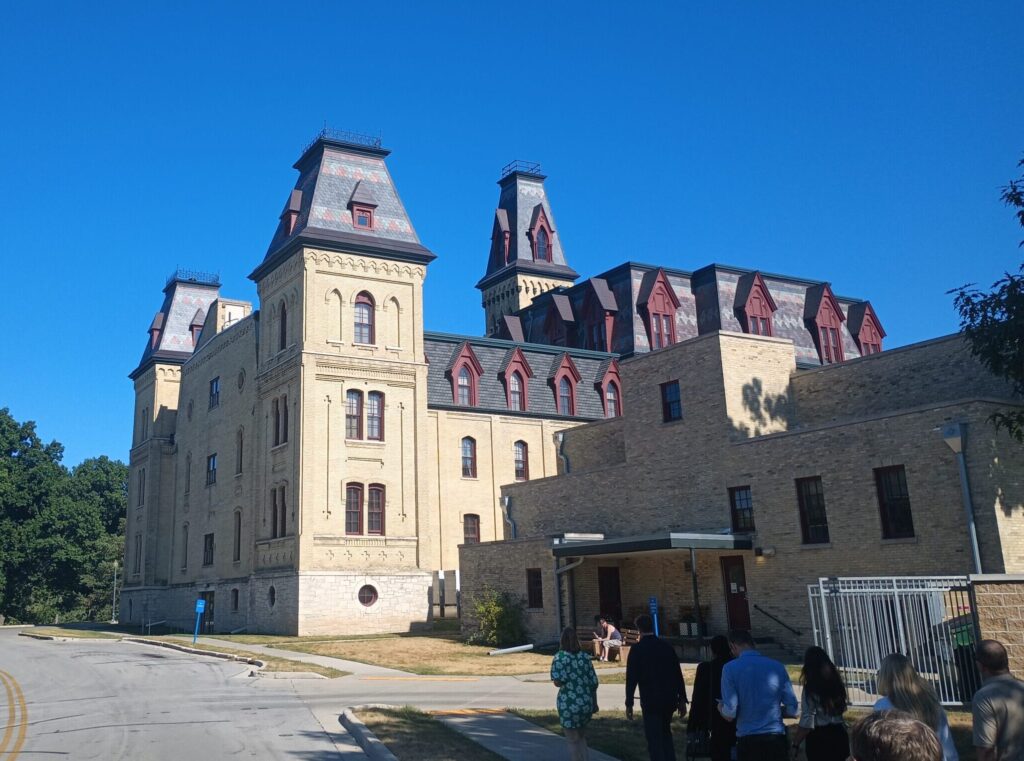
Photo Credit: Peter Beeson | Exterior view of one of the buildings in the Milwaukee Soldiers Home campus
The tour also included Spring City Crossing in Waukesha, developed by Bear Development. The community includes a 52-unit apartment building and a 20-unit stacked-flat building, offering a neighborhood-scale example of workforce and income-restricted housing. Its stacked-flat design highlights the importance of community-scale design. By introducing housing in a form that complements existing neighborhoods, projects like Spring City Crossing can help build community support while expanding housing choices, demonstrating that successful development is as much about relationships and trust as it is about construction and financing.
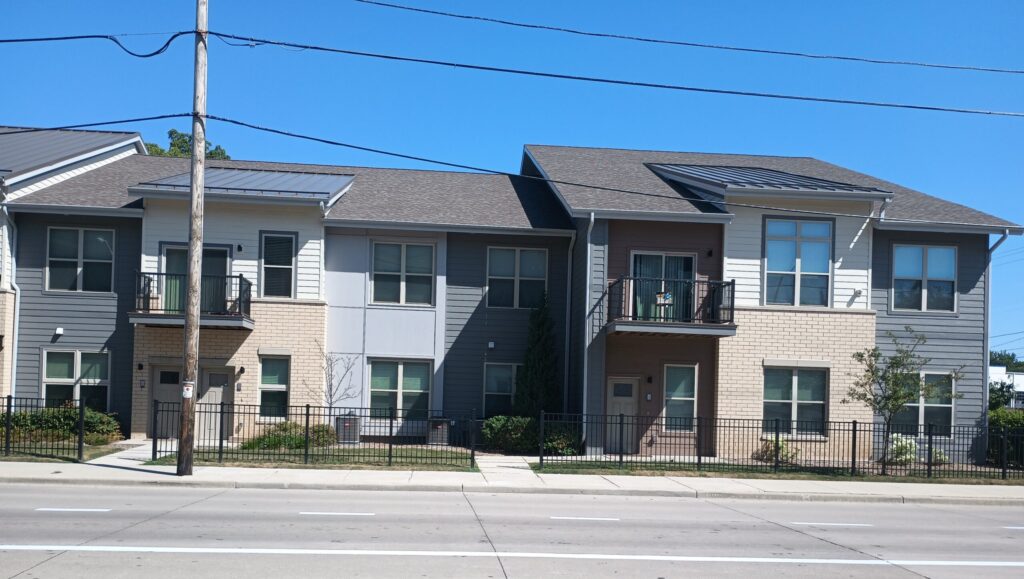
Photo Credit: Peter Beeson | Exterior view of one of the buildings in the Milwaukee Soldiers Home campus
What It Means for HCC’s Work
These examples connect directly to Hope Community Capital’s approach to community development. Whether advancing permanent supportive housing, adaptive reuse projects, community facilities, or neighborhood-scale housing, HCC sees firsthand that successful projects depend on more than capital investment alone. They require strong partnerships, community leadership, technical expertise, public support, and a shared vision for the future.
The conference reinforced that affordable housing solutions emerge when multiple forms of capital come together. They require policy alignment, flexible financing, strong development partners, service coordination, and community support. And while financial tools may help make a project possible, it is often human capital, the leadership, relationships, and commitment of stakeholders, that brings projects from vision to reality.
Continuing the Conversation
HCC is grateful for the opportunity to learn alongside partners from across Wisconsin and to share insights from our own work in permanent supportive housing. As communities continue to face housing affordability challenges, we invite partners, policymakers, developers, service providers, and advocates to keep the conversation going. As communities across the nation continue to address housing affordability challenges, the need for collaboration has never been greater. We invite developers, local governments, nonprofits, service providers, funders, and community leaders to join the conversation. Together, we can combine resources, expertise, and leadership to create housing solutions that strengthen communities and expand access to safe, stable, and affordable homes.